The Fur and Feather Blog

The Rehearsal Effect: Why your training isn’t working!

I’ve been training so much. Why isn’t it working?

It’s really common that dog, cat, and parrot owners come to us having already done a lot of training with their pet, and they’re often frustrated that no matter what they try, it never seems to stick. When we hear this complaint, there is usually one common denominator: the rehearsal effect.  Essentially, their pet is still practicing the very behavior that they’re trying to get rid of.  Here’s an analogy to help you understand what’s going on.

Neuroplasticity and animal training

First, think of a forest full of trees and bushes.  Each time you walk a path through that forest, it gets a little easier to get from point A to point B as you wear down the vegetation.  If you walk that path enough, over the course of years, it becomes wide and clear and easy to travel – virtually the only way to get where you want to go!

The neural connections in your dog, cat, or bird’s brain are like that forest.  Each time your pet performs a certain behavior, his brain is “walking a certain path.” If he walks that path often, the neurons in his brain literally re-wire themselves to be better at that behavior. This means that that behavior not only gets easier and easier, but it can also become virtually the only way of fulfilling a need – it gets him from point A to point B with the least amount of difficulty.  Why take the back roads when you can take the freeway? This is called the Rehearsal Effect, and it’s what makes early intervention in dog, cat, and parrot training so important!

What we’re trying to do with our training is carve a new path through that forest. In rehearsing a new behavior, a new means to an end, your pet begins to walk a new path over and over – and the more opportunity to practice your pet has, the more this new pathway grows, until it becomes the new “freeway” – an easy and effective path to take.

Here’s where behavior management comes in.

Now, here’s the trick.  If you don’t stop using the old freeway and give it a chance to disintegrate, it will still be there in the background, enticing your pet into relapsing!  That is why so many do-it-yourself training programs fail.  Behavior management is essential in training – you must be creative and proactive in preventing your pet from “practicing” the unwanted behavior.  Each time your dog, cat, or bird has a “relapse,” he is maintaining that old pathway.

Don’t let them practice what you don’t want them to perfect. 
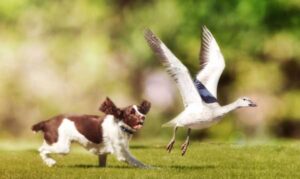
 

This means that you may need to get creative. All of the best dog, cat, and parrot trainers are also excellent lateral thinkers.  If you have a bird who bites, use protected contact to avoid allowing them to rehearse that behavior while you re-train more appropriate ones. If you have a dog who ignores your recall, put her on a long line when hiking so she can’t run off.  If you have a cat who attacks you when you walk down a certain hallway, restrict her access to that hallway until you address the underlying problem.   Try to avoid situations in which your pet is likely to fail, and actively seek out situations your pet can handle – stack the deck in your favor.  Put some forethought into your plan, and contact us if you need help- some of us are used to implementing plans like this for a living! 

How to Socialize a Sick or Injured Puppy

Well, shoot.

Your puppy is sick or injured and can’t attend Puppy Kindergarten class. Don’t panic – there are still lots of activities you can do to socialize and entertain him! Be sure to consult with your veterinarian, and take things easy on days when your puppy is feeling poorly. For the days when he’s feeling pretty spunky, here are some ideas.

  • Have a puppy party at home. Invite some friends over — preferably some kids, too — and have them give your puppy treats, pet and play with him.
  • Visit a friend’s house. If your pup is contagious, be sure to choose a friend who doesn’t have a dog. You can just explore the back yard together if they prefer.
  • Work on sound desensitization. Get your puppy used to thunderstorms, waves, fireworks, crowds, crying babies, construction noise, and other strange auditory experiences by playing him some sound habituation tracks for dogs – they are easy to find on YouTube.
  • Play I Spy. Drive your pup to a busy area with lots of activity, like a park, playground, downtown, or strip mall, and let them watch the goings-on out the window. Remember to praise and reward any time something potentially scary happens, like a car alarm or siren going off, a shopping cart rolling by, a dog barks, etc.
  • Practice your vet handling skills. You’re going to need them in the coming weeks anyway, right? Practice touching your pup’s paws, lifting their ears, looking at their teeth, lifting their tail, and light restraint (think a hug). Follow each motion you make up with a treat and lavish praise, keep your sessions short, and your pup will be far more comfortable during their exams.
  • Get outside. Does your puppy have all his vaccinations? Take him for a walk—just tell other dog owners he is sick so they keep their dogs away. If your pup is injured, see if he’ll settle for riding in a wagon or dog stroller instead (these are often easy to find secondhand online).
  • Construct an obstacle course. Have your puppy explore some safe obstacles and surfaces. Have him walk over a heating vent, and up and down stairs. Lay an ex-pen or baby gate on the ground, and practice walking over it. Can you lure your pup through a hula-hoop? Construct a “tunnel” with a blanket and some chairs and teach him to go through it. Practice helping your pup to weave through some cones (or other household objects). Can you lure your pup into putting all four feet into a cardboard box? How about putting his front feet up onto a book? His back feet?
  • Make some multi-species friends. If you know someone with a dog-friendly horse, ask them if your pup can meet him or her through a fence. Ditto a dog friendly cat, parrot, chicken, tortoise, bearded dragon, etc.

Don’t give up!

The key to good socialization is to help your pup understand that new things are fun! The “new things” you’ll have to use if your pup is sick or injured might not look like what you had envisioned, but you can still drive home this essential lesson – it just requires thinking outside the box a little. 

If you’re still having trouble, contact us for some private training – we’re happy to help, and we can tailor it to exactly your puppy’s needs and abilities!

What to Do About a Dog Who Barks and Lunges

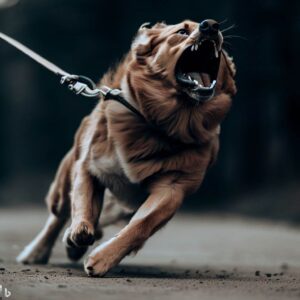
First things first. If you have a dog who barks and lunges at others dogs or people (a “reactive dog” as it’s commonly known), please hear this: you are not alone and it is not your fault!
 
Got it? The first and most important thing you can do to begin helping yourself and your dog through this challenge is to stop feeling guilty, ashamed, or embarrassed about it.
 
It’s also, by the way, not your dog’s fault. He is stressed and struggling as much as you when these outbursts occur.
 
Now that we’ve sorted that out, the second thing you can do right now is avoid rehearsal of the problem behavior. If your dog can’t take a walk in the neighborhood without having an outburst of barking and lunging (or several), those neighborhood walks are adding more stress to his life than anything else.
 
You may already have noticed there is little you can do to get his attention in the midst of a reactive outburst. No scolding OR reward that really matters to him. That’s because he is TOO DISTRESSED to notice these things, let alone process what they mean.
 
Meanwhile, that stress builds up over time for both of you, which makes outbursts grow more common and more severe. Although it may seem like avoidance is a “band-aid solution,” it IS the first step in long-term change. You’ll be surprised how much better you and your dog will feel without the constant worry.
 
So, to break this cycle, think outside the box for meeting your dog’s needs. Walk in places or at times of day when you’ll be unlikely to see other dogs – consider covering less distance in your walks, but letting your dog sniff more.
 
If that isn’t available, replace walks with more training and enrichment activities. Trick training, nose work training, food puzzles, food scatters, playing with you… these are all things that can be done at home to help fulfill your dog’s daily needs without exposing him to stressful walks.
 
Lastly, please get help! This problem is so common, and we professional dog trainers have well-developed, kind, and effective ways of addressing it. Please get in touch if you and your dog are ready for relief!

Share:

BROWSE OUR BLOG

More Posts

Flirt Pole Rules

A flirt pole is a powerful teaching tool. Many dogs find the flirt pole so intensely exciting that if you don’t play with rules, they

Fur and Feather Works is hiring!

Fur and Feather Works is hiring! This is an employee (W-2) position for in-home behavior work – all admin work will be handled by us!