The Fur and Feather Blog

How to Groom a Dog with Long Hair at Home

If you added a long-haired dog to your family without realizing how much maintenance their coat requires, don’t feel bad – you’re not alone!

The luxurious fur of a long-haired dog adds to their charm, but it also requires regular attention to keep it looking its best. Grooming your long-haired dog is not just about aesthetics; it’s essential for their comfort and well-being.

Brushing: The Foundation of Grooming

Regular brushing is the cornerstone of maintaining a long-haired dog’s coat. This essential step prevents mats and tangles and keeps the fur clean and healthy. The frequency of brushing will depend on your dog’s breed and coat type, but as a general rule, aim for at least a few times a week.

Start by choosing the right brush for your dog’s coat. Slicker brushes, pin brushes, and combs are all good options, but be sure to consult your groomer or veterinarian for specific recommendations. The best brush for your dog will depend on his or her coat type.

When brushing your long-haired dog:

  • Begin at the tips and work your way towards the roots to avoid pulling and causing discomfort.
  • Pay extra attention to areas that tend to tangle, like behind the ears, under the legs, and around the tail.
  • Use a gentle, steady hand to avoid hurting your dog.

Bathing: Keeping the Coat Clean

Bathing is another crucial aspect of long-haired dog grooming. While over-bathing can strip their coat of essential oils, regular baths are necessary to keep their fur clean and prevent odors and skin issues.

Here’s how to bathe your long-haired dog:

  • Use a dog-specific shampoo that suits your dog’s coat type and skin sensitivities.
  • Thoroughly wet your dog’s coat, making sure to reach the skin.
  • Lather the shampoo, starting from the neck and moving towards the tail, being careful to avoid the eyes, ears, and mouth.
  • Rinse thoroughly, ensuring there’s no leftover shampoo residue.
  • Towel dry your dog and, if needed, use a hairdryer on a low heat setting to finish the drying process.

If your dog has regular appointments with a professional groomer (which we strongly recommend!), they may not require baths between appointments. Even so, it is good to have proper supplies on hand in the event your dog comes home muddy, dirty, or stinky from their latest adventure.

Managing Mats and Tangles

Despite your best efforts, mats and tangles can still occur, especially in areas where your dog’s fur rubs against itself or frequently gets wet. Pay special attention to these areas so you can address mats and tangles before they become unmanageable.

Be gentle when you tease out mats with your fingers or a mat splitter. Pulling on mats can be painful for your dog, just like it is painful when someone pulls your hair. Be patient and err on the side of caution if your dog seems uncomfortable or defensive. Your dog is likely to escalate to growling or snapping if you are ignoring their efforts to communicate and continuing to cause them pain.

If you cannot work through a mat without your dog showing signs of discomfort, it is best to stop and engage a professional groomer to address the problem.

When it comes to maintaining your dog’s long coat, knowledge is power.

Knowing the right tools and techniques will help you maintain your dog’s coat as effectively and efficiently as possible. Brushing doesn’t have to be a dreaded chore!

Speak with your professional groomer about resources to learn how to better care for your dog’s coat; we guarantee you they have recommendations.

You can also attend our free Grooming Your Fluffy Dog at Home Workshop! During this two-hour workshop a professional groomer will teach you the fundamentals of proper at-home grooming to maintain your dog’s coat between grooming appointments.
Contact us to find out more about this invaluable class.

Haunted Halloween Sniff-N-Go!

REGISTRATION FOR THIS EVENT IS NOW CLOSED.

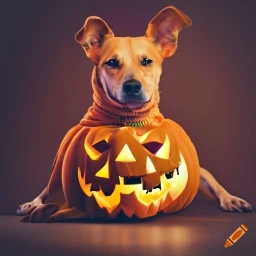
Join us at Fur and Feather Works for a super fun and spooky* sniff n’ go with two interior search areas, and a giant container search – in the dark! Each dog will be given a glow necklace so that their handler can see where they are, but handlers will need to use their sense of hearing to determine when to call alert, since their ability to read their dog’s body language won’t be as acute in the dark. We’ll also have a scary* photo booth to pose your dog in front of!

We can’t wait for you to see our three, themed search areas!

Haunted House (interior)
The Spider Room (interior)
Bountiful Boos (large container search)

The Details:

Where: Fur and Feather Works (9475 Double R Blvd. Ste 12)
When: Friday Oct 27, 5:30pm – 8:00pm
Cost: $15/search area or $40 for all three!

Humans and dogs are encouraged to come in costume! Dogs must be on odor and familiar with searching in novel environments to participate.  All hides will be birch.

Click here to sign up!

Feel free to contact us with any questions!

*your dog shouldn’t find anything in these searches scary. We can’t speak for you.

*invite past participants

How to Entertain a Sick or Injured Dog

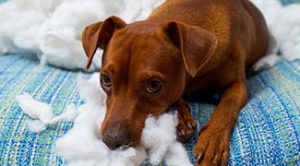
Well, shoot.Dog destroying bedding

Your dog is sick or injured and can’t do the usual activities that would entertain him and wear him out. Don’t panic – there are still lots of things you can do to keep his mind busy! Be sure to consult with your veterinarian, and take things easy on days when your pup is feeling poorly. For the days when he’s feeling pretty spunky, here are some ideas.

Have a get well party. If your dog likes people, invite some friends over for dinner, and have them give your pup treats, pet him and play with him.

Visit a friend’s house. If your pup is contagious, be sure to choose a friend who doesn’t have a dog. You can just explore the back yard together if they prefer.

Do a puzzle. A food puzzle, that is! There are lots of these available both to buy and make at home – just search online for “dog food puzzle” or “dog food dispensing toy.” If your dog likes his own food, just use his meals for this. If he’s a bit pickier, use a healthy treat, but be sure to cut back on the amount of food your dog gets in his meal so he doesn’t become overweight – at least until he’s able to exercise again.

Play I Spy. Drive your pup to a busy area with lots of activity, like a park, playground, downtown, or strip mall, and let them watch the goings-on out the window.

Try a Sniffari. If your dog is physically able to take walks, drive somewhere where there’s lots of empty space – the desert, a deserted park, or a dirt road is good for this. Put your dog on a long line and a harness, and follow him wherever he wants to go. The fun part of a Sniffari is, he gets to decide where you go, how long he gets to sniff, where to head to next … he’s in the driver’s seat!

Get some wheels. If your pup is a relatively calm sort, instead of walks, consider teaching him to ride in a wagon or dog stroller (these are often easy to find secondhand online). Begin in the house with the wagon or stroller still, then praise and treat him for staying in it. Slowly begin to roll it, a little at a time, always praising and treating your dog for staying put. When it comes time to take a walk, ask someone else to come with you to make sure your dog stays seated inside the vehicle for entire trip.

Construct an obstacle course. You’d be surprised just how tiring proprioception exercises are! Lay an ex-pen or baby gate on the ground, and practice walking over it. Can you lure your pup through a hula-hoop? How about walking backward? Construct a “tunnel” with a blanket and some chairs and teach him to go through it. Practice helping your pup to weave through some cones (or other household objects). Can you lure your pup into putting all four feet into a cardboard box? How about putting his front feet up onto a book? His back feet?

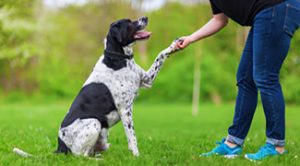
Dog giving paw to owner

Teach some new tricks. There is a whole world of fun tricks to learn that don’t require a lot of movement. Some ideas might be: touch a button or a bell to make a sound, push a beach ball/toy truck with your nose, lay your head down between your paws, play dead, shake a paw/high five/wave, give a “kiss”.

Play some scenting games. Dogs love to use their noses to solve puzzles, and it can be surprisingly tiring. Hide treats around the house or yard, then let your dog find them (you might let them watch you hide them at first, until they get the idea). Play a version of the Shell Game with some paper cups and a treat. Hide somewhere in your house, then encourage your dog to find you by calling them – don’t forget to reward when they do!

Be creative!

Focus on tiring out your dog’s brain, rather than their body. Actually, this is good advice in general for a well-behaved dog. Dogs are incredible athletes, so sometimes we forget how effective it is to tire out their brains, as well! If you need some help getting creative, contact us for help!

Share:

BROWSE OUR BLOG

More Posts

Flirt Pole Rules

A flirt pole is a powerful teaching tool. Many dogs find the flirt pole so intensely exciting that if you don’t play with rules, they

Fur and Feather Works is hiring!

Fur and Feather Works is hiring! This is an employee (W-2) position for in-home behavior work – all admin work will be handled by us!